Active ingredients
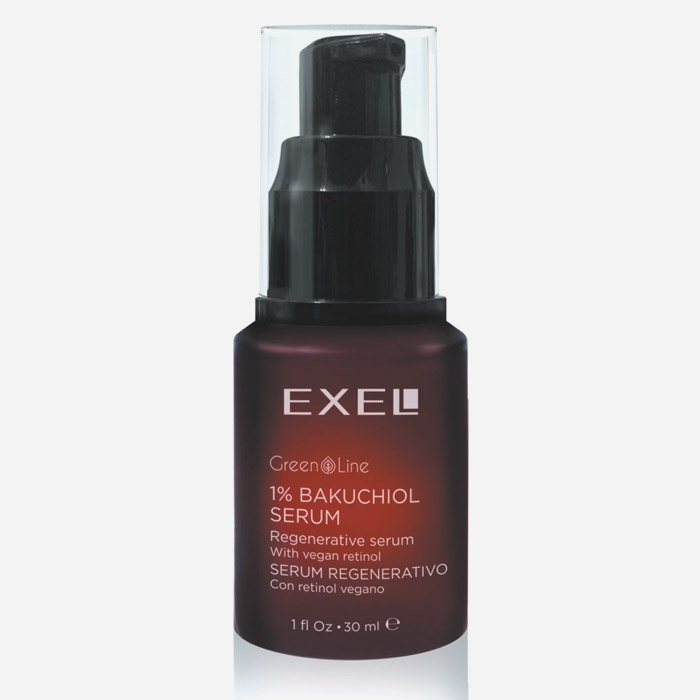
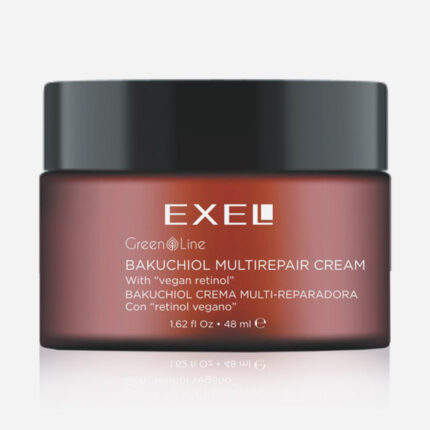
- Bakuchiol (Vegan Retinol). Derived from the seeds of Psoralea corylifolia, Aka Babchi, a plant important in Indian and Chinese medicine. It has anti-inflammatory, antioxidant and anti-bacterial properties. On skin it behaves in a way very similar to well-known skincare ingredient retinol. To be more specific, both Bakuchiol and retinol upregulate collagen I, III and IV production and downregulate MMP, the enzymes that destroy collagen. The two also work very nicely together and Bakuchiol can actually help to stabilize the otherwise unstable and hard to formulate retinol. Bakuchiol not only shows anti-aging properties but also nice anti-acne
- Rosehip Oil Eco-liposomes (Rosa moschata). Similar to many other great plant oils, it is a nice nourishing and moisturizing oil loaded with fatty acids(linoleic acid – 44%, linolenic acid – 34% and oleic acid – 14%). What makes rosehip oil special is that it also contains the miracle active, trans-retinoic acid, aka tretinoin. It is the main bioactive component of the oil and has all kinds of abilities including restoring and regenerating tissues (the oil is great for scars and burns), decreasing wrinkles, helping acne and even normalizing pore size. Encapsulated in vegetable origin liposomes which enhance its penetration and effectiveness.
- Niacinamide. Niacinamide or vitamin B3 has many studies and skin benefits: (i)Anti-aging, wrinkle-smoothing, it boosts collagen production as well as keratin, filaggrin and involucrin synthesis. (ii)Skin-lightening: it suppresses the transfer of melanosomes (little spheres carrying the melanin pigment) from melanocytes to keratinocytes. (iii)Improves barrier repair functions by stimulating ceramide synthesis. (iv) Sebum regulating and anti-inflammatory. (v) Speeds up epidermal cell growth,smoothing skin structure
- Vegetable Squalene. (100% Olive origin). Oil derived from shark liver or from plants (usually olives). It is also a natural component of skin´s sebum. Superb moisturizer and emollient with antioxidant properties making your skin look nice and smooth, without being heavy or greasy.
- Vitamin E (vitamin E pure). Fat-soluble antioxidant, it defends skin from pollution and other environmental stressors that lead to signs of aging, providing significant photoprotection against UVB rays.
- Ceteraryl alcohol. Fatty alcohol either naturally derived (coconut) or made synthetically. Emollient emulsifier, it enhances the foaming capacity of a cleanser. According to the U.S. FDA, cosmetic products labeled “alcohol free” are allowed to contain cetearyl alcohol, because the effects do not pose a risk of damaging or sensitizing your skin.
- Coco-caprylate/caprate Vegetable silicone obtained from Coconut plant. Emollient.
- Sucrose polystearate. Emollient, emulsifying, skin conditioning, surfactant.
- Glyceryl citrate/lactate/linoleate/oleate. 100% natural sunflower based liquid emulsifier.
- Sodium levulinate. Natural preservatives from starch and vegetable inulin.
- Potassium sorbate. Natural preservative derived from potassium salt and sorbic acid (found in fruits of Sorbus accuparia or produced synthetically).
- Sodium benzoate. Salt of benzoic acid, found naturally in foods like cranberries, apricots, mushrooms, and honey. It is used as a preservative in both cosmetics and food products, where it prevents both bacterial and fungal growth, though it is more active against the latter
- Acacia senegal gum. Sticky substance (resin) known as arabic gum used as thickener.
- Xantham gum. Polysaccharide produced from fermentation of sugar molecules used as a thickener and texture enhancer.