Active ingredients
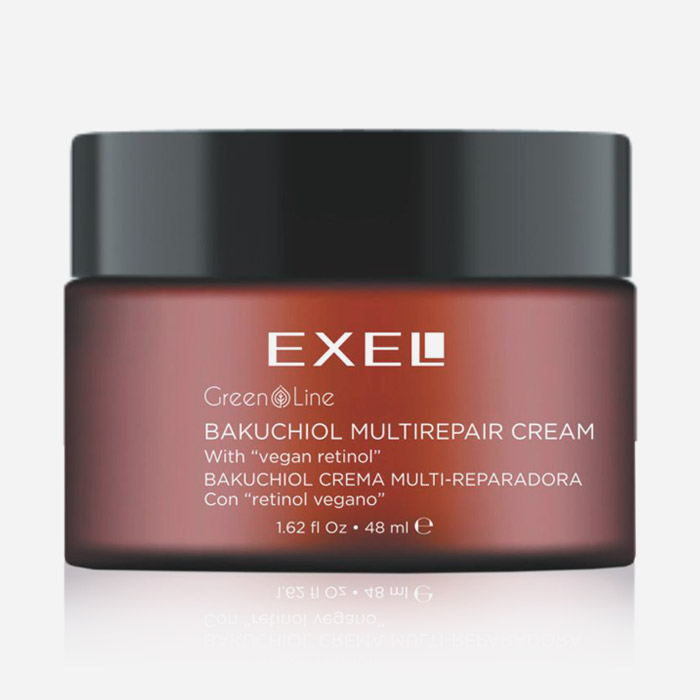
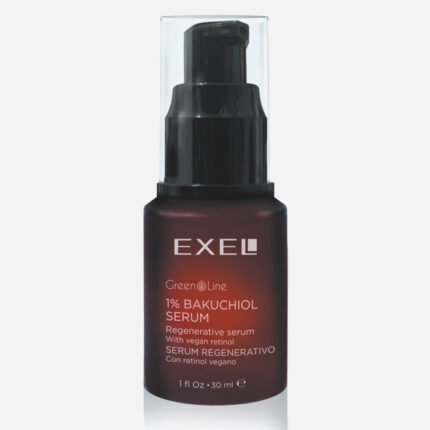
- Bakuchiol (Vegan Retinol). Derived from the seeds of Psoralea corylifolia, Aka Babchi, a plant important in Indian and Chinese medicine. It has anti-inflammatory, antioxidant and anti-bacterial properties. On skin it behaves in a way very similar to well-known skincare ingredient retinol. To be more specific, both Bakuchiol and retinol upregulate collagen I, III and IV production and downregulate MMP, the enzymes that destroy collagen. The two also work very nicely together and Bakuchiol can actually help to stabilize the otherwise unstable and hard to formulate retinol. Bakuchiol not only
- Rosehip Oil Eco-liposomes. (Rosa moschata). Similar to many other great plant oils, it is a nice nourishing and moisturizing oil loaded with fatty acids(linoleic acid – 44%, linolenic acid – 34% and oleic acid – 14%). What makes rosehip oil special is that it also contains the miracle active, trans-retinoic acid, akatretinoin. It is the main bioactive component of the oil and has all kinds of abilities including restoring and regenerating tissues (the oil is great for scars and burns), decreasing wrinkles, helping acne and even normalizing pore size. Encapsulated in vegetable origin liposomes which enhance its penetration and effectiveness.
- Argan Oil (Argania spinosa). Argan oil comes from the kernel of the fruit of the argan tree that grows only in Morocco. It contains nourishing and moisturizing unsaturated fatty acids, mainly oleic, linoleic and palmitic. It also contains vitamin E, phenols (including caffeic acid, ferulic acid, and picatechin), as well as some rare sterols with soothing and anti-inflammatory properties. It can greatly nourish and moisturize the skin and hair. It’s also claimed to be able to neutralize collagen-damaging free radicals, help reduce scars, and revitalize and improve skin elasticity.
- Mallow extract (Malva sylvestris). Extract from the blue mallow flower, it may have some skin-soothing properties for the skin, as well as some potential antioxidant benefits.
- Jojoba Oil (Simmondsia chinensis). Jojoba oil has a texture similar to skin sebum providing restoring and emollient properties.
- Chamomille extract. (Chamomilla recutita).Plant with high content in terpenes, polysaccharides and flavonoids such as α-bisabolol and Epigenin that provide antioxidant and restoring benefits.
- Aloe extract (Aloe barbadensis). Extract containing leaves of the Aloe vera plant. It has similar moisturizing, emollient and anti-inflammatory properties as the juice itself.
- Vitamin E (Tocopheryl acetate). Fat-soluble antioxidant, it defends skin from pollution and other environmental stressors that lead to signs of aging, providing significant photoprotection against UVB rays.
- Coco-caprylate/caprate. Vegetable silicone obtained from Coconut plant. Emollient.
- Sucrose polystearate. . Emollient, emulsifying, skin conditioning, surfactant.
- Glyceryl citrate/lactate/linoleate/oleate. 100% natural sunflower based liquid emulsifier.
- Sodium levulinate. Natural preservatives from starch and vegetable inulin.
- Sodium benzoate. Salt of benzoic acid, found naturally in foods like cranberries, apricots, mushrooms, and honey. It is used as a preservative in both cosmetics and food products, where it prevents both bacterial and fungal growth, though it is more active against the latter
- Cetyl alcohol. Gentle fatty alcohol used as an emollient (moisturizing ingredient), emulsifier, thickener, and carrying agent for other ingredients. It can be derived naturally, as in coconut fatty alcohol, or made synthetically
- Ceteraryl alcohol. Fatty alcohol either naturally derived (coconut) or made synthetically. Emollient emulsifier, it enhances the foaming capacity of a cleanser. According to the U.S. FDA, cosmetic products labeled “alcohol free” are allowed to contain cetearyl alcohol, because the effects do not pose a risk of damaging or sensitizing your skin.
- Propanediol. Natural alternative to propylene glycol, obtained from sugar. Solvent, moisturizing, emollient and softening.
- Potassium phosphate. Used as pH adjuster.
- Sucrose cocoate. SC is made by combining sugar esters from coconut acid (fatty acids from coconut oil) to create a mild surfactant that also serves as an emulsifier and skin-softening emollient. Although it is usually derived from coconut, synthetic forms also exist